%20(LinkedIn%20Banner)-2.png)


Teatro alla Scala (more commonly known as La Scala) is well known by classical music connoisseurs and operatic dabblers alike. The Milanese opera house has undergone numerous restorations since it was first built almost 250 years ago, needing to be rebuilt almost entirely after extensive bombing damage in the Second World War, but its historic magnificence has nevertheless remained unaffected. Join us in delving into the secrets behind La Scala to uncover why it is considered one of the greatest opera houses that the world has to offer.
A legendary opera
The legendary interior of La Scala is not all that meets the eye…or indeed the ear! The opera house of more than 3,000 seats cleverly conceals an ongoing project to optimise the acoustics of the theatre without infringing upon the time-honoured details of its layout and design. Ensuring the very best acoustics has led to some unexpected decisions having to be made. Natural rope fibres are still used for hoisting scenery; although metal would be more efficient, there were concerns about how this could affect the acoustics! In the last few years, carpets, wall upholstery and armrests have all been replaced to minimise sound absorption. Since even the tiniest sound is amplified, there really is no margin for error from performers at La Scala, rendering it a daunting place to perform.
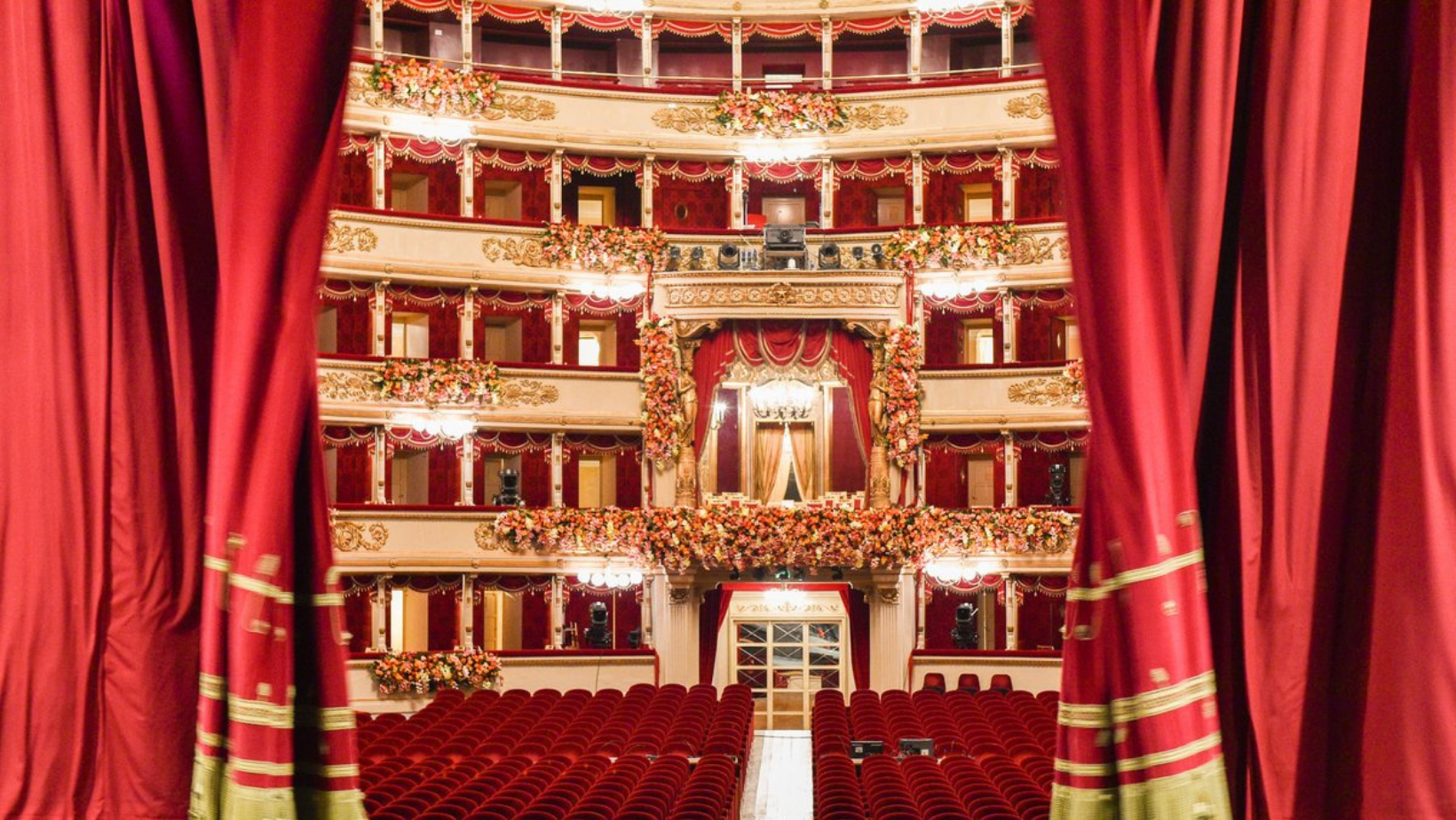
While offering present-day attempts to optimise the acoustics of the theatre, La Scala also boasts a historic prestige in the world of opera that sets it apart from many great opera houses. La Scala housed the world premieres of some of the world’s finest operas at the height of the bel canto era, including Rossini’s Il turco in Italia (1814), Bellini’s Norma (1831) and Donizetti’s Lucrezia Borgia (1833). It later witnessed a shift towards the verismo style by hosting the world premieres of Verdi’s Otello (1887) and Puccini’s Madama Butterfly (1904).
A popular Opera
Since the 19th century, La Scala’s principal conductors have also been prominent musicians of particularly standing in the world of opera, with highly acclaimed conductors such as Arturo Toscanini, Victor de Sabata and Claudio Abbado among many others taking the baton. Countless admired singers and musicians have graced La Scala over the last 200 years, although for some, performing at La Scala marked an important step in their career. For instance, Maria Callas proved so popular after her debut at La Scala in Verdi’s I vespri siciliani in 1951 that the theatre became her artistic home for the rest of the decade!

If its historic reputation wasn’t enough to strike awe and reverence into the hearts of any performers at La Scala, the opera house offers a unique yet formidable force in its second gallery in the form of the ‘loggionisti’. The ‘loggionisti’, named after the ‘loggione’ or high galleries, are La Scala’s harshest critics. They listen, they judge, and they loudly voice their opinions as the performance goes on. Luciano Pavarotti once received a hostile reception from the loggionisti in a performance of Verdi’s Don Carlos in 1992. In 2006, French tenor Roberto Alagna was actually booed off stage during a production of Verdi’s Aida, forcing his understudy Antonello Palombi to replace him mid-performance and continue the show in jeans!
One of the most famous opera houses in the world
Although it today possesses a reputation of international renown, La Scala is also an opera house at the heart of Milanese culture. Throughout the 19th century, La Scala was described as ‘the universal drawing room for all the society of Milan’; in this period, the theatre was the preeminent meeting place for Milan’s nobility, while the foyer doubled up as a casino. Did you know La Scala was the first building in Milan to have electric lights when it received them in 1883! La Scala’s season also traditionally opens on the 7th December each year, the feast day of Saint Ambrose, the patron saint of Milan, demonstrating its close links with its local culture.

La Scala is exceptionally rich with history, culture, long-standing prestige and unparalleled efforts to optimise the theatre’s acoustics. It is no surprise that it is recognised as being one of the world’s greatest yet most formidable opera houses to attend and perform at.


